
Let's say you called around for quotes. One came from a local pest control company just a few towns over. The other came from a national chain with trucks parked in nearly every state. Both technicians sounded friendly on the phone. Both quotes landed in a similar price range, give or take a few dollars. So what actually changes once you sign on the dotted line and a technician is standing in your driveway? That's the real question, and it deserves a straight, honest answer rather than a sales pitch dressed up as advice. This isn't about crowning a winner — it's about understanding two genuinely different ways of running a pest control business, so you can pick the one that fits how you like to be treated as a customer.
What Actually Changes With A Local Company
With a local pest control company, the person handling your account is often the same person who answers the phone — or sits a few desks away from whoever does. Decisions about scheduling, a treatment plan, or a concern you raise midway through service tend to happen close by, not through several layers of corporate approval. In practice, that usually means you can reach someone directly when a question comes up, instead of working your way through a phone tree first.
Because those calls happen locally, scheduling can often bend more easily around your week. And since the same technicians tend to work the same towns over and over, a local team frequently builds a sharper sense of the pest pressures specific to your immediate area — which ant trails show up every spring near a particular zip code, or which older foundations tend to hold moisture. That familiarity can translate into a plan shaped around your actual property, not a generic script.
What Actually Changes With A National Chain
That kind of scale brings its own real advantages, and it's worth giving those a fair shake too. Standardized protocols mean the treatment you get in New Jersey should look a lot like the treatment a customer gets in a different state entirely, since the same playbook governs every branch. For anyone who values consistency above almost everything else, that uniformity is a genuine benefit — you generally know what to expect, wherever the crew happens to be coming from.
These companies also tend to carry broader brand recognition and marketing reach, plus service coverage across many states, which matters if you own property in more than one place or move around often. The tradeoff usually shows up on the service side, though. Customer service is often routed through a centralized call center rather than the local office, which can mean an extra step or two between you and the technician who actually shows up at your door on treatment day.
Side-By-Side: The Real Tradeoffs
Here's how the two approaches typically stack up, factor by factor. None of this is about one option being wrong — it's about knowing what you're actually choosing between.
| Factor | Local Company | National Chain |
|---|---|---|
| Decision-Making | Owners and staff working directly in the business often make the call on scheduling and treatment questions | Decisions typically move through a larger corporate and regional management structure |
| Scheduling Flexibility | Can often flex more easily since scheduling decisions happen close to home | Scheduling generally runs through standardized, company-wide systems |
| Treatment Customization | Plans can be tailored to your specific property and the pest pressures common in your immediate area | Protocols are typically standardized and applied consistently across many locations |
| Customer Service Channel | Often a direct line to the local office or the technician themselves | Frequently routed through a centralized call center before reaching the local branch |
| Brand Recognition | Reputation built locally, usually through word of mouth and local reviews | Broader name recognition and marketing reach across many states |
What This Looks Like With EcoFusion Specifically
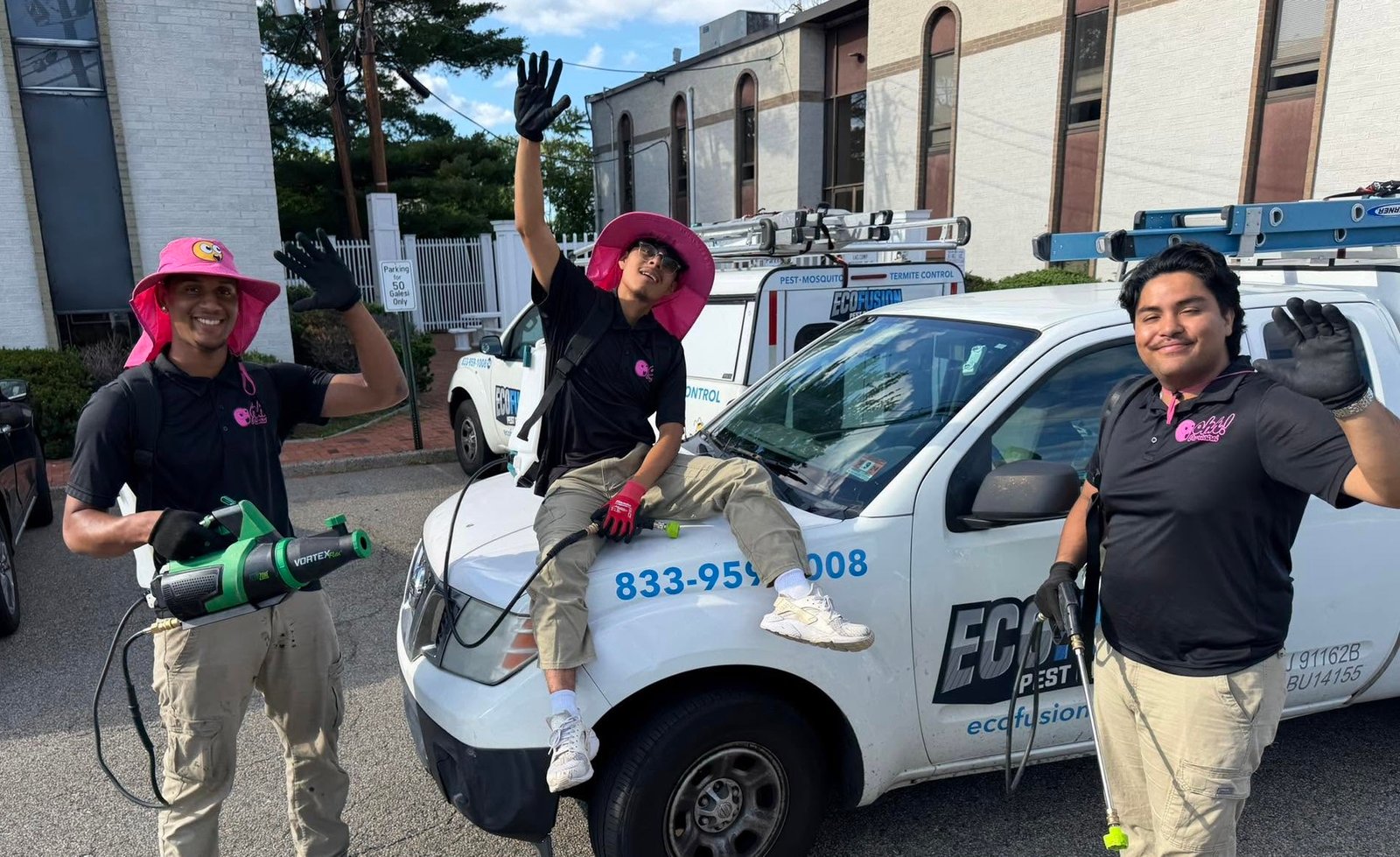
EcoFusion is family-owned, which is one of the clearer examples of what that phrase actually means in practice rather than just a word on a website. We're NJ DEP licensed and NPMA GreenPro certified, and we've served New Jersey since 2009 out of our Roseland office. That's not a sales pitch — it's simply who shows up at your door, and it's the kind of detail that's easy to check for yourself before you book anything.
In practice, that means the people planning your treatment live near the properties they service. If you need ant control in Montclair or mosquito control in Wayne, it isn't a generic regional rollout — it's a plan built around what actually shows up in those specific towns. And if your priority is a broader look at the whole property rather than one pest at a time, our full range of pest control services covers that ground as well.
So which one is right for you? Honestly, it depends on what you value more. If direct access and property-specific customization matter most, a local company is worth a call. If the predictability of a national chain's standardized protocol appeals to you more, that's a legitimate preference too. Either way, it helps to ask a few questions upfront: who will actually show up, how scheduling gets handled, and who you call when something needs adjusting. If you'd like to see how we handle those questions, our story covers how EcoFusion got started, and our commercial pest control clients can tell you what that direct-access approach looks like for a business, not just a home. We're happy to walk you through a straightforward quote, no pressure attached.