
You walk outside, glance up under the eave, and there it is — a papery gray lump you definitely didn't put there. Your first question probably isn't "what species is that." It's "do I need to worry about this today, or can it wait?" Fair question. The honest answer depends entirely on what actually built it. A docile pollinator and an aggressive nest-defender can look almost identical from twenty feet away, so let's break down what's really going on up there before you decide whether to call someone or just admire it from a distance.
Meet The Bee: The One You Actually Want Around
Honey bees and bumblebees are the friendliest insects on this list, honestly. Their bodies are fuzzy and round, built for hauling pollen rather than picking fights. Away from the hive, they're generally calm and would rather move on than confront you. That gentle reputation is earned — they pollinate a huge share of the plants in your yard, which makes them genuinely beneficial rather than a nuisance to eliminate. Honey bees like tucked-away cavities, think hollow trees or gaps inside a wall, where they build a waxy comb. Bumblebees are homebodies of a different sort; they often nest right in the ground or in some low, hidden spot like an old rodent burrow. If you find one of these colonies, the smart move usually isn't extermination at all. Because they matter so much to the ecosystem, professional bee removal services typically focus on relocating the colony safely instead of wiping it out.
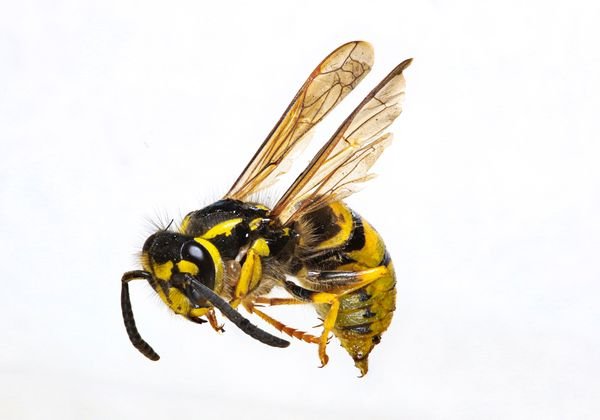
Meet The Wasp: The Defensive One
Their cousins on this list look sleeker right away. Smooth, shiny bodies and that unmistakable pinched waist give wasps away at a glance. Temperament-wise, they're a different animal too — they tend to get defensive fast once a nest feels threatened. In New Jersey, you're mostly dealing with two types. Yellowjackets like to nest underground or slip inside a wall void, building a hidden, papery gray structure you might not notice until you're standing right on top of it. Paper wasps, meanwhile, build the classic open, umbrella-shaped nest you'll spot hanging under a porch roof or deck overhang. Either way, once one of these shows up near a doorway or a patio, it's usually time to call in a wasp exterminator rather than risk getting close enough to test how defensive they really are.
Meet The Hornet: The Big One
Here's a fun twist — technically, this last one is just a large, bold type of wasp. The bald-faced hornet is the one you'll actually run into around here, and it's hard to miss with its striking black-and-white markings. It's the biggest of the three, and its nest matches that scale: a large, fully enclosed gray paper ball, often built high in a tree or up under a roofline. That size and visibility come with a catch. This insect defends its nest aggressively once disturbed, more so than either of the others, so a nest near where kids play or where you park the car isn't something to handle solo. Professional hornet nest removal exists precisely for situations like this — big, high up, and not forgiving of a bad first attempt.
Side-By-Side: Tell Them Apart By Body And Nest
Sometimes the fastest identification trick isn't the insect at all — it's the nest. A large, enclosed gray ball high in a tree usually points to one of the bigger stinging insects above. An open, umbrella-shaped comb tucked under an eave suggests the paper-building type. An entrance at ground level, or one coming straight out of a wall, is the classic underground sign. And a waxy structure hidden inside a cavity, like a hollow tree or wall void, tends to mean the pollinators are the ones home. Here's the full comparison side by side.
| Feature | Bee | Wasp | Hornet |
|---|---|---|---|
| Body Type | Fuzzy, hairy, rounder body | Smooth, shiny body with a narrow, defined waist | Smooth body, larger overall, bold black-and-white patterning |
| Temperament | Generally docile away from the hive | More defensive; reacts quickly when the nest is disturbed | Aggressively defends the nest once disturbed |
| Nest Material | Waxy comb (honey bees); no built nest for many bumblebees | Papery material, either hidden or in an open comb | Papery material, built into a large fully enclosed shell |
| Typical Nest Location | Cavities like walls or hollow trees (honey bees); ground or low hidden spots (bumblebees) | Underground or inside wall voids (yellowjackets); open, under eaves (paper wasps) | High up in trees or on structures |
Once you've got a rough idea of what's out there, the next decision is easy: leave a beneficial colony alone or have it relocated safely, and get anything defensive removed properly. If you're in Essex or Passaic County and you're staring at a nest right now, we offer wasp control in Montclair and wasp removal in Clifton, along with coverage across the rest of Northern NJ. Not sure which of the three you're looking at? Send us a photo, and we'll tell you exactly what you're dealing with, and what it'll take to handle it safely.